
 iPhone Data Recovery
 iOS System Recovery
 iOS Data Backup & Restore
 iOS Unlocker
 iPhone Password Manager
 Location Changer
 Android Data Recovery
 Broken Android Data Extraction
 Android Data Backup & Restore
 Android Unlocker
 FoneTrans for iOS
 iPhone Data Eraser
 iPhone Cleaner
 HEIC Converter
 HyperTrans
 WhatsApp Transfer for iOS
 Mac Sweep
 Data Retriever
 Mac Data Retriever
 Video Converter Ultimate
 Screen Recorder
 Phone Mirror
iPhone Stuck in Recovery Mode? Restore It with or without iTunes
 Posted by Boey Wong / September 16, 2026 09:00
Seeing your iPhone stuck on the "Connect to computer" screen with a cable icon is one of the most heart-stopping moments for an iPhone user. That is recovery mode, and it usually shows up when something goes wrong during an update, restore, or jailbreak. The good news is that getting out of it is usually straightforward, and you do not always have to wipe your phone to do it.
In this guide, I will walk you through two ways to restore an iPhone in recovery mode: the official iTunes/Finder route and a no-data-loss method with FoneLab iOS System Recovery. I will also explain why your phone got there in the first place and how to keep it from happening again.
Part 1. Why Is My iPhone Stuck in Recovery Mode?
Before you start pressing buttons, it helps to understand what recovery mode is and why your phone landed there. Recovery mode is a troubleshooting state that lets a computer restore or update the iOS software when the phone cannot boot normally. Common triggers include:
- A failed iOS update. If an update gets interrupted by a dead battery, a loose cable, or a network drop, the phone may boot into recovery mode instead of the home screen.
- A botched restore. Restoring from an old or corrupted backup can leave the phone in recovery mode.
- Jailbreak gone wrong. A failed jailbreak or an incompatible tweak can cause a boot loop that lands the phone in recovery mode.
- Hardware issues. Rarely, a faulty battery or storage chip can trigger recovery mode during startup.
- Accidental button combo. Holding the wrong buttons while restarting can force the phone into recovery mode.
The key question is whether you have a backup. If you do, the iTunes/Finder restore in Part 2 is the official path. If you do not, or you want to avoid wiping everything, skip to Part 3 for the no-data-loss method.
Part 2. Restore iPhone in Recovery Mode with iTunes or Finder
This is Apple's official method. It works on both Windows and Mac, though the app name differs. Note that a full restore will erase all data on the phone, so only use this if you have a backup or you do not mind starting fresh.

Step 1Connect your iPhone to the computer using the original USB cable. Make sure the cable is in good condition and plugged directly into the computer, not a hub.
Step 2On a Mac running macOS Catalina or later, open Finder. On a Windows PC or older Mac, open iTunes (or the Apple Devices app on Windows 10/11).
Step 3Select your iPhone in the sidebar of Finder or iTunes. You should see a message saying "There is a problem with the iPhone that requires it to be updated or restored."
Step 4Click Update first if the option is available. This reinstalls iOS without erasing your data. If Update does not work or is not available, click Restore. This erases the phone and reinstalls the latest iOS.
Step 5Wait for the download and restore to complete. Keep the phone connected until you see the "Hello" setup screen.
If the restore fails with an error code (like 4013, 9, or 3194), try a different USB cable, a different USB port, or restart both the computer and the phone. If it still fails, the method in Part 3 can often fix it.
Part 3. Restore iPhone without iTunes via FoneLab iOS System Recovery
If you do not have a backup, or the iTunes restore keeps failing, FoneLab iOS System Recovery is the tool I recommend. It can fix an iPhone stuck in recovery mode, Apple logo, boot loop, or black screen without erasing your data. It works by reinstalling the iOS firmware in a controlled way, preserving your photos, messages, and apps.

FoneLab enables you to fix iPhone/iPad/iPod from DFU mode, recovery mode, Apple logo, headphone mode, etc. to normal state without data loss.
- Fix disabled iOS system problems.
- Extract data from disabled iOS devices without data loss.
- It is safe and easy to use.
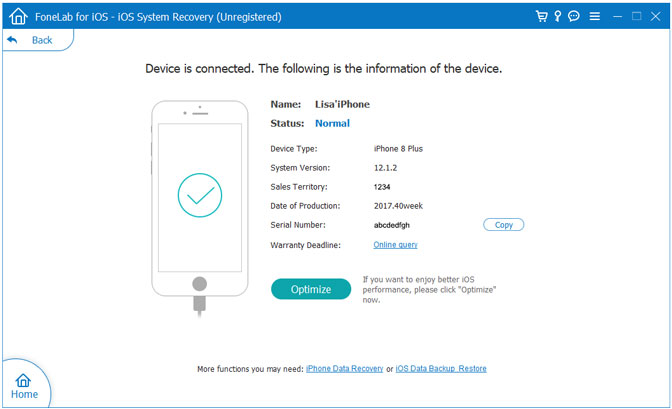
Step 1Download and install FoneLab iOS System Recovery on your Windows PC or Mac. Open it and choose iOS System Recovery from the main interface.
Step 2Connect your iPhone to the computer with a USB cable. The software will detect that the phone is in recovery mode and show its status.
Step 3Click Start and confirm your device model. The software will download the matching iOS firmware package automatically.
Step 4Choose Standard Mode to fix the issue without data loss. Click Confirm to start the repair process.
Step 5Wait for the repair to finish. The phone will restart automatically and boot to the home screen with all your data intact.
What makes this tool stand out is that it handles the firmware download and installation for you. You do not need to hunt for IPSW files or worry about getting the wrong version. It also supports all iPhone models from older generations up to the latest iPhone, and it works with both Windows and Mac.
Part 4. Comparison: iTunes/Finder vs. FoneLab iOS System Recovery
Not sure which route to take? Here is a quick side-by-side look.
| iTunes/Finder Restore | FoneLab iOS System Recovery | |
|---|---|---|
| Data loss | Yes (full erase) | No (Standard Mode) |
| Needs backup? | Yes, to recover data | No |
| Difficulty | Easy | Very easy |
| Fixes boot loops? | Sometimes | Yes |
| Error code handling | Manual troubleshooting | Automatic |
| Cost | Free | Paid software |
If you have a recent backup and do not mind erasing the phone, iTunes/Finder is the free way to go. If you have no backup, or the iTunes restore keeps failing with error codes, FoneLab iOS System Recovery is the safer and more reliable choice.
Part 5. Tips to Avoid Recovery Mode Problems
Prevention is always better than recovery. These are the habits I follow to keep my iPhone out of recovery mode:
- Back up regularly. An iCloud or computer backup means you always have a recent copy to restore from. Enable iCloud Backup in Settings > your name > iCloud > iCloud Backup.
- Keep the battery above 50% during updates. A dead battery mid-update is one of the most common causes of recovery mode.
- Use the original cable. Cheap third-party cables can drop the connection during a restore, causing a boot failure.
- Do not jailbreak. Jailbreaking voids your warranty and significantly increases the risk of a boot loop or recovery mode.
- Update iOS promptly. Apple's updates often fix bugs that can cause startup issues.
- Do not disconnect during a restore. Pulling the cable while iOS is being installed can corrupt the system partition.
If your phone does end up in recovery mode, the most important thing is not to panic. In most cases, you can get out of it in under 15 minutes with either method above. If you are worried about data loss, start with Part 3 before trying a full iTunes restore.
FoneLab enables you to fix iPhone/iPad/iPod from DFU mode, recovery mode, Apple logo, headphone mode, etc. to normal state without data loss.
- Fix disabled iOS system problems.
- Extract data from disabled iOS devices without data loss.
- It is safe and easy to use.
Part 6. FAQs about iPhone Recovery Mode
Will recovery mode delete everything on my iPhone?
Recovery mode itself does not delete anything. It is just a state that lets a computer restore or update iOS. However, choosing Restore in iTunes/Finder will erase all data. FoneLab iOS System Recovery's Standard Mode can fix the issue without erasing anything.
How long does it take to restore an iPhone in recovery mode?
It depends on your internet speed and the firmware size. Typically, it takes 15 to 45 minutes, including the firmware download. Keep the phone connected the whole time.
Can I exit recovery mode without restoring?
Sometimes a force restart will exit recovery mode. Press and quickly release Volume Up, press and quickly release Volume Down, then press and hold the Side button until the Apple logo appears. If that does not work, you will need to restore.
What if iTunes says it cannot restore the iPhone because an error occurred?
Error codes like 4013, 9, or 3194 usually mean a connection or firmware issue. Try a different cable or USB port, restart your computer, and make sure your security software is not blocking iTunes. If it still fails, FoneLab iOS System Recovery can often bypass these errors.
Getting stuck in recovery mode is scary, but it is almost always fixable. Start with a force restart, then try the iTunes/Finder update option, and if all else fails, FoneLab iOS System Recovery can get your phone back without data loss. For related issues, check how to fix iPhone stuck on Apple logo or fix iPhone stuck in recovery mode.
FoneLab enables you to fix iPhone/iPad/iPod from DFU mode, recovery mode, Apple logo, headphone mode, etc. to normal state without data loss.
- Fix disabled iOS system problems.
- Extract data from disabled iOS devices without data loss.
- It is safe and easy to use.


